How can I verify that a UK betting site is fully licensed by the UKGC?
June 11, 2026

Marco Proano
Writer & Fact-Checker
Updated: June 11, 2026
Let's be honest, most people don't spend their time checking gambling licences before opening a betting account. They see a flashy offer, a few big promises, and before they know it, they've signed up.
That's exactly why we've put this guide together. At NewBettingSites.uk, we only work with bookmakers that are licensed by the UK Gambling Commission (UKGC). Every betting site we recommend has been checked to make sure it's legally allowed to accept UK customers.
The problem is that not every website plays by the same rules. Recently, we've seen more and more sites promoting offshore bookmakers that don't hold a UKGC licence, often making them look just as safe and trustworthy as regulated UK operators.
The reality? They aren't the same thing. The good news is that checking whether a bookmaker is properly licensed takes less than a minute. In this guide, we'll show you exactly how to do it, what red flags to watch out for, and how to make sure your money is going to a betting site that follows UK gambling laws.
What Is the UK Gambling Commission?
The UK Gambling Commission (UKGC) is the organisation responsible for regulating gambling in Great Britain. Its job is to make sure betting sites, casinos, bingo operators and other gambling companies follow strict rules designed to protect customers and keep gambling fair.
If you’ve ever looked at the footer of a bookmaker’s website, you’ve probably seen the words “Licensed and Regulated by the UK Gambling Commission”. That’s not just a fancy badge. It means the operator has been approved to legally offer gambling services to customers in the UK.
The UKGC also has the power to investigate operators, issue fines, impose restrictions and even revoke licences when companies fail to meet the required standards. That’s one of the reasons why UKGC-licensed bookmakers are generally considered among the safest in the world.
What Does a Bookmaker Need to Get a UKGC Licence?
You might think launching a betting site is as simple as building a website, sticking a few odds on football matches and waiting for customers to arrive.
The reality is very different. Before a bookmaker can legally accept UK customers, it has to convince the UK Gambling Commission that it’s a serious business and not some fly-by-night operation. First up, the regulator wants to know exactly who’s behind the company. Who owns it? Who runs it? Where is the money coming from? If the answers don’t stack up, the application isn’t going anywhere.
The bookmaker also needs to show that it has enough money to operate properly and pay customers when they win. That might sound obvious, but the UKGC isn’t interested in taking chances when people’s money is involved.
Then there are the customer protection checks. Operators must have systems in place to stop underage gambling, spot potential problem gambling, verify customer identities and help prevent fraud and money laundering.
Put simply, the UKGC wants proof that a bookmaker can be trusted before it’s allowed anywhere near UK punters.
That’s one of the reasons a UKGC licence carries so much weight. It tells you that the operator has been through a pretty thorough vetting process before being given the green light to operate in the UK.
Here’s a quick look at some of the main boxes operators need to tick:
- Full company and ownership details
- Background checks on directors and key personnel
- Financial and funding checks
- Anti-money laundering procedures
- Customer identity verification systems
- Responsible gambling measures
- Underage gambling prevention tools
- Secure betting and payment systems
- Complaint handling procedures
- Ongoing compliance and reporting processes
How Much Does a UKGC Licence Cost?
The cost depends on the type and size of the gambling operation.
As of 2026, operators must typically pay:
| Fee Type | Typical Cost |
|---|---|
| Application Fee | Approximately £4,200 to £90,000+ |
| Annual Licence Fee | Approximately £4,200 to £1 million+ |
| Personal Management Licence (PML) | Around £370 application fee plus annual maintenance fees |
The exact fee is calculated based on the gambling activities offered and the operator’s expected annual revenue. For example, a small online bookmaker serving a limited customer base will pay considerably less than a major operator such as Bet365, William Hill or Ladbrokes.
More Details on UKGC Licensing Requirements
Step 1: Check the Footer of the Betting Site
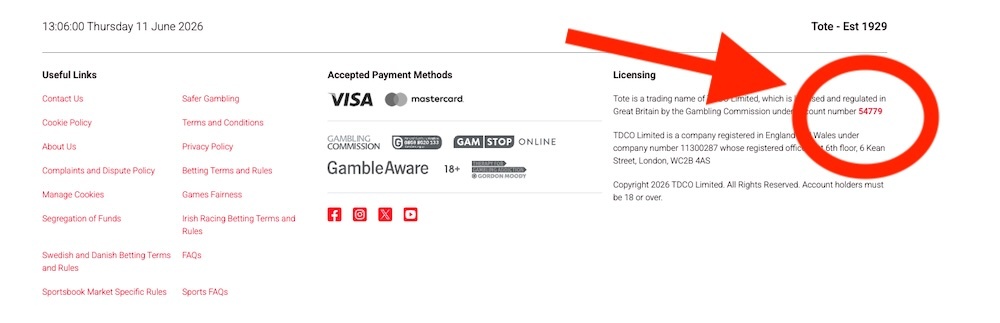
The easiest way to check whether a bookmaker is licensed by the UK Gambling Commission is to head straight to the bottom of its website.
Almost every legitimate UK betting site displays its licensing information in the footer. You will usually find a statement similar to:
Tote is a trading name of TDCO Limited, which is licensed and regulated in Great Britain by the Gambling Commission under account number 54779.
In most cases, the account number or the words “Gambling Commission” will be a clickable link. When you click it, you should be taken directly to the bookmaker’s profile on the official UK Gambling Commission website.
For many bettors, this simple check is enough. If the link takes you to an active licence record on the UKGC website and the details match the bookmaker you’re using, you can be confident that the operator is licensed to accept customers in Great Britain.
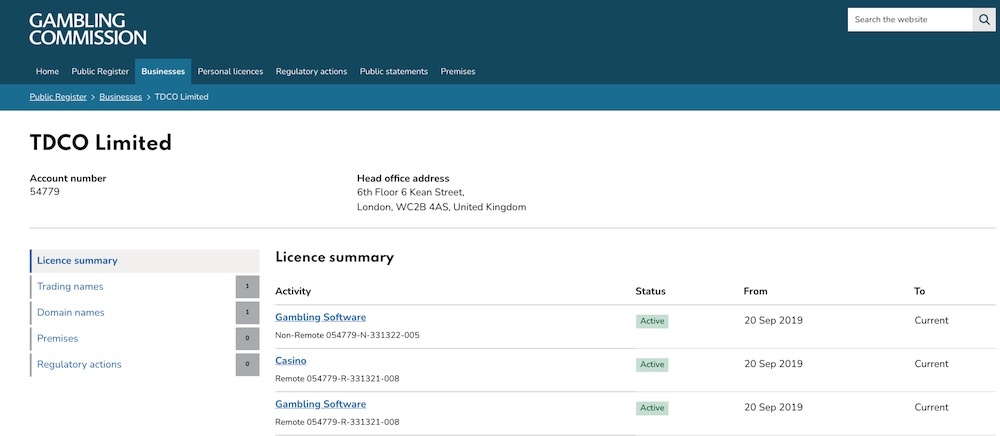
Step 2 Check for Recent Regulatory Actions
Finding a valid UKGC licence is a great start, but don’t stop there.
One mistake many punters make is assuming that a licensed bookmaker is automatically a trustworthy bookmaker. In most cases that’s true, but it’s still worth digging a little deeper.
When you visit a bookmaker’s profile on the UK Gambling Commission website, you’ll often be able to see whether the operator has been subject to any recent regulatory action. This can include warnings, licence conditions, settlements or substantial fines handed out by the regulator.
Now, a fine from five or ten years ago isn’t necessarily a dealbreaker. But if a bookmaker has repeatedly been in trouble for failing to protect customers, allowing anti-money laundering controls to slip, or breaching gambling regulations, it’s definitely something worth paying attention to.
Think of it like checking the reviews before booking a hotel. The licence tells you the operator is allowed to do business in the UK. Its regulatory history tells you how well it’s been doing the job.
If you notice a pattern of repeated enforcement action, customer protection failures or major compliance issues, that should raise a few eyebrows and may be a good reason to look at alternative bookmakers with a cleaner track record.
Step 3: Check the Logos at the Bottom of the Site
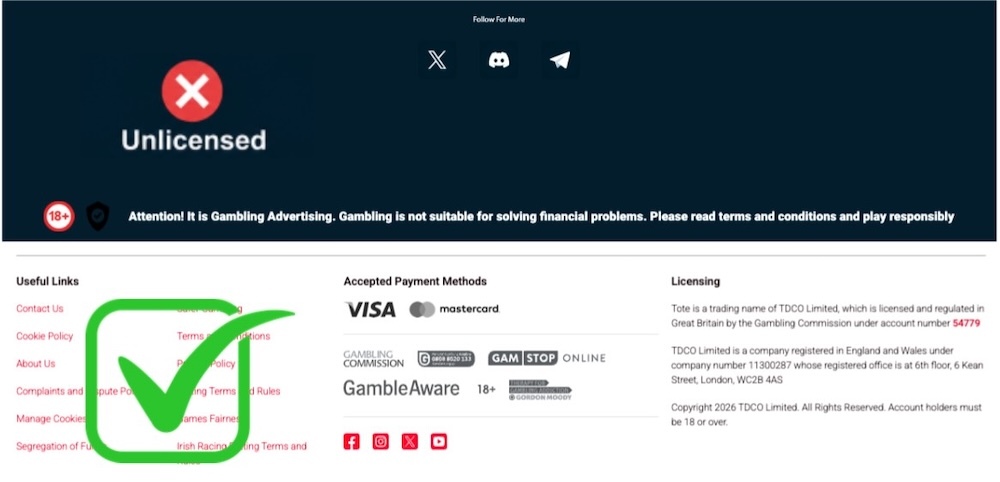
Here’s a quick trick that takes less than 30 seconds.
Scroll down to the footer of the bookmaker’s website and take a look at the logos displayed there.
Legitimate UKGC-licensed bookmakers will usually feature links to organisations that help protect players and promote safer gambling. These often include GambleAware, GamStop, GamProtect and other recognised industry bodies.
You’ll also normally find links explaining how to make a complaint and what options are available if you end up in a dispute with the bookmaker. That’s because UK-licensed operators are required to have procedures in place for handling customer complaints fairly.
Take the example above. Alongside the licence information, you can clearly see references to safer gambling organisations and customer protection resources. That’s exactly what you’d expect to find on a bookmaker operating under UK Gambling Commission rules.
Now compare that with many offshore or unlicensed betting sites.
Some won’t display any recognised UK gambling organisations at all. Others might copy a few logos or include vague responsible gambling messages, but the links either don’t work or don’t lead to genuine organisations. In many cases, that’s because they aren’t part of these schemes and aren’t accountable to the same standards as UK-licensed operators.
It’s not a foolproof test, but it’s another useful piece of the puzzle.
If a betting site claims to welcome UK customers but doesn’t mention recognised safer gambling organisations, dispute resolution procedures or customer protection tools anywhere on the site, that’s usually a good reason to dig a little deeper before signing up.
Why It Pays to Stick With a UKGC-Licensed Bookmaker
Let’s be honest. Most people don’t spend hours reading licence details before opening a betting account.
They see a decent offer, like the look of the website and sign up.
The problem is that not all bookmakers are playing by the same rules.
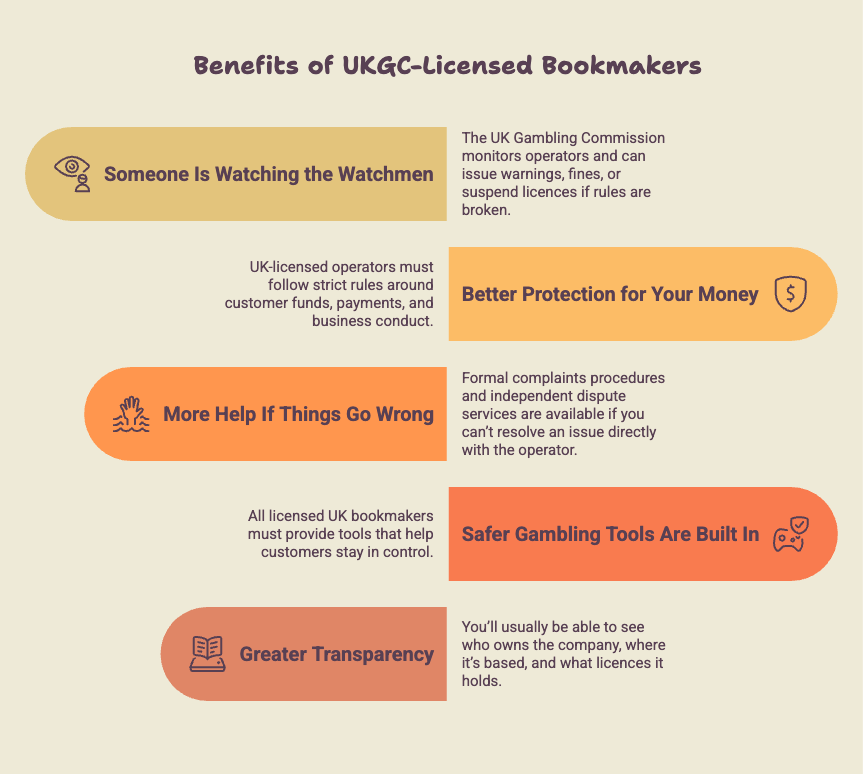
When you choose a UKGC-licensed betting site, you’re dealing with a company that’s being watched by one of the toughest gambling regulators in the world. That might not sound exciting, but it can make a huge difference when your money is on the line.
The Risks of Betting with an Unlicensed Bookmaker
We’ve all seen them.
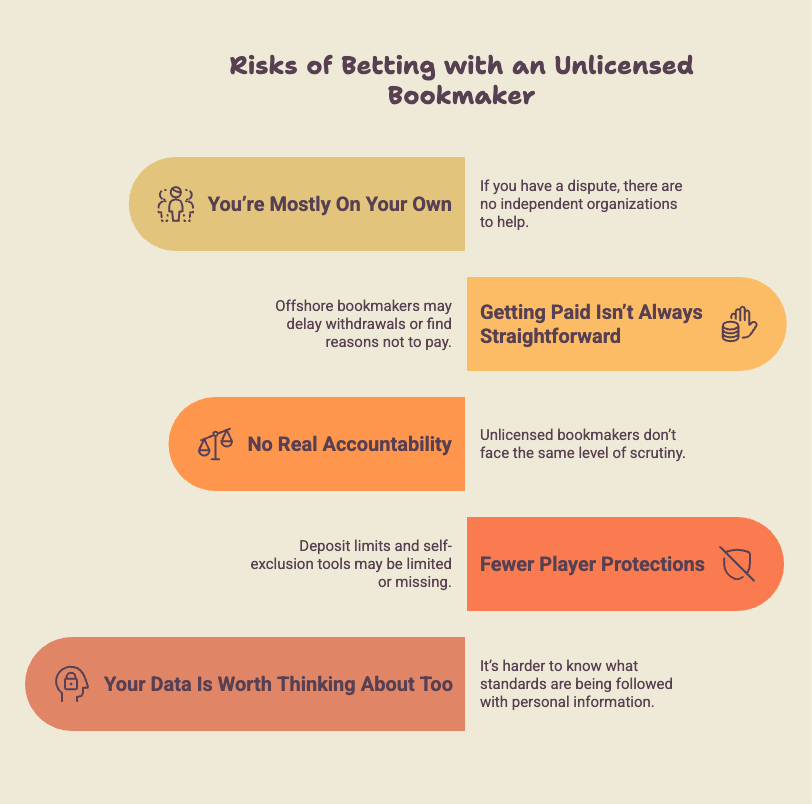
A betting site pops up offering massive bonuses, fewer restrictions and odds that seem a little too good to be true. It looks professional, the website works fine and there are even a few positive reviews floating around online.
So what’s the catch?
The biggest issue isn’t necessarily what happens when everything goes right. It’s what happens when something goes wrong.
Where to Get Help and Advice
Whether you’re having a dispute with a bookmaker, want to report a gambling-related issue, or simply feel that gambling is becoming a problem, there are several trusted organisations that can help. Below you’ll find some of the most well-known support services available to UK bettors, along with their contact details and areas of expertise.
| Organisation | What They Help With | Website | Telephone | |
|---|---|---|---|---|
| GamCare | Free, confidential support for anyone affected by gambling harm. | https://www.gamcare.org.uk/ | [email protected] | 0808 8020 133 |
| GAMSTOP | Free self-exclusion service for blocking access to UK online gambling accounts. | https://www.gamstop.co.uk/ | [email protected] | 0800 138 6518 |
| GambleAware | Information, advice and signposting for gambling support in Great Britain. | https://www.gambleaware.org/ | N/A - use website support pages | Support available via online adviser services |
| Gambling Therapy | Global online support for people affected by gambling harm. | https://www.gamblingtherapy.org/ | [email protected] | N/A - live chat support available online |
| UK Gambling Commission | Regulator for gambling in Great Britain. Useful for licence checks, complaints guidance and reporting unlicensed gambling. | https://www.gamblingcommission.gov.uk/ | Use official online contact form | Use official contact page for phone options |